
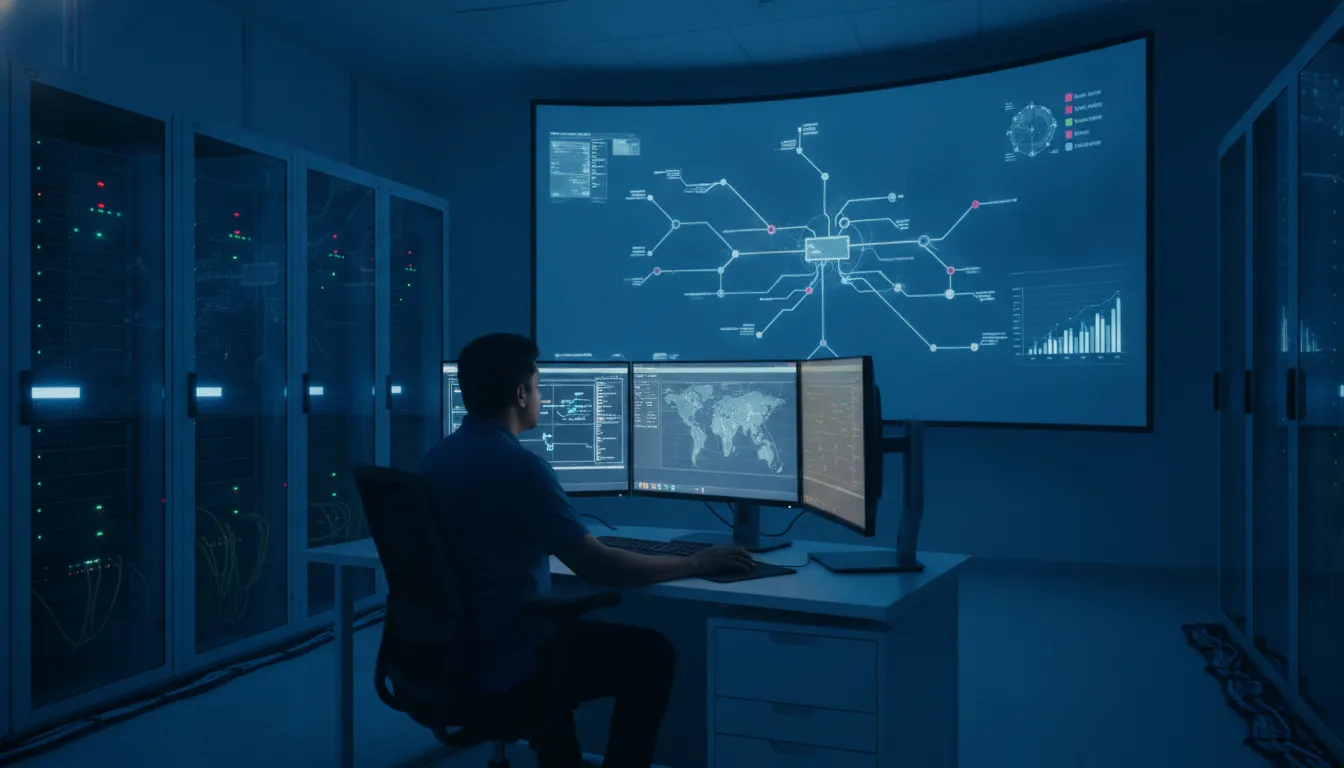
For a manufacturer or engineering firm in Williamson County, a brief network failure can interrupt production, delay field work, and pull managers into an avoidable IT crisis. Waiting for an employee to report a problem turns a small warning into a business disruption.
Contact Computek for a free IT assessment before the next outage exposes a preventable weakness.
A practical network monitoring Georgetown Texas solution continuously checks servers, firewalls, routers, switches, and connections, helping identify issues early so they can be addressed before they cause downtime.
That proactive approach is especially valuable for organizations with limited internal IT resources and little tolerance for unpredictable repair costs. Computek combines local knowledge with structured managed services for businesses across Georgetown, Round Rock, Pflugerville, and North Austin. The practical question is what that continuous oversight actually includes, from system health and bandwidth to alerts, security events, and backup status.
Network Monitoring Georgetown Texas: What Does 24/7 Network Monitoring Cover?
Effective monitoring looks beyond whether a company can access the internet. It continuously checks the systems that support daily operations, identifies abnormal conditions, and routes actionable alerts to the people responsible for resolving them. For a manufacturer, engineering firm, or other growing business in Georgetown and Williamson County, that visibility helps address a developing issue before it interrupts production or customer service.
Server health and network connectivity
Monitoring tools track server availability, processor and memory utilization, storage capacity, service status, and other indicators of system health. They also watch the network path that connects users, applications, and cloud services. This includes local area network (LAN) and wide area network (WAN) components such as firewalls and routers, which must remain operational and connected to the internet. Williamson County’s technology administration documentation identifies these LAN and WAN responsibilities as core network functions.
When a server begins running out of storage or a network device starts dropping connections, an alert can trigger investigation before employees encounter a complete outage. Network monitoring is particularly valuable for identifying issues involving firewalls, routers, and switches before they cause downtime. As reflected in the Texas Department of Information Resources’ managed network services specifications.
Bandwidth, security events, and backup status
Bandwidth tracking shows how much capacity the business is using and where congestion may be developing. A sudden increase in traffic, an overloaded connection, or an application consuming disproportionate bandwidth can affect voice, file access, cloud applications, and remote work. Reviewing usage trends also helps an IT team determine whether a configuration change or capacity upgrade is justified.
Security event detection adds another layer of oversight. Monitoring can flag unusual login activity, unexpected changes to devices, suspicious traffic patterns, and other events that warrant review. It does not replace a complete cybersecurity program, but it gives the IT team earlier visibility into conditions that may require containment or investigation.
Backup verification checks whether scheduled jobs ran successfully, whether protected systems are reachable, and whether failures are being reported. Proactive IT administration commonly includes redundancy measures such as backups, mirroring, and fault tolerance to support business continuity. A failed backup should be treated as an actionable exception, not discovered only after a file or system must be restored.
What RMM adds to monitoring
Remote monitoring and management (RMM) combines visibility with controlled remote administration. Through RMM, technicians can review alerts, apply approved maintenance, manage patches, investigate device health, and document remediation without waiting for an on-site visit. Learn more about remote IT management and how it supports a proactive service model.
For businesses evaluating managed IT services in Williamson County, the key question is not simply whether a provider offers a monitoring dashboard. Ask what is monitored, how alerts are prioritized, who responds, how backup failures are escalated, and what happens when a problem needs hands-on work.
Why Williamson County Manufacturers and Engineers Need Proactive IT Monitoring
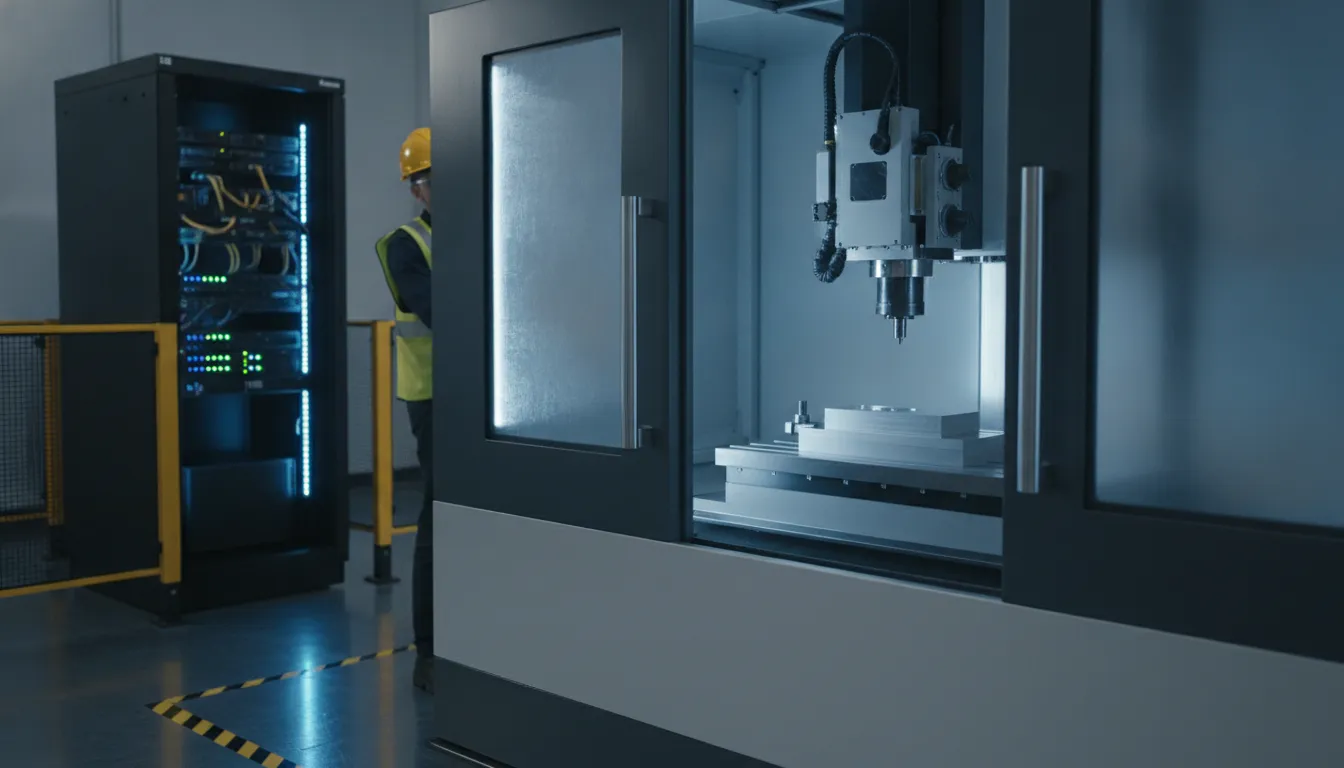
For a manufacturer or engineering firm in Georgetown, Round Rock, or the surrounding Williamson County area, an IT outage can interrupt more than email. A disconnected workstation may leave a CNC operator unable to retrieve a production file. A failed switch can stop communication between the shop floor and office. If design files, work orders, or shared project folders become inaccessible, employees may be paid while production waits.
Those risks are especially serious in environments that depend on operational technology (OT), industrial equipment, and tightly controlled production workflows. Threats aimed at endpoints, servers, remote access tools, or industrial networks can disrupt operations even when they do not result in a conventional data breach. Monitoring helps the IT team identify unusual activity, failing infrastructure, and service degradation early enough to investigate before a minor issue becomes a plant-wide interruption.
Downtime affects production schedules and customer commitments
Manufacturing downtime can leave CNC machines idle, delay material processing, and push delivery commitments beyond schedule. Engineering teams face a different version of the same problem when project drawings, CAD files, or shared specifications are unavailable. Proactive monitoring does not eliminate every outage, but it gives the support team visibility into the conditions that often precede one. Including overloaded equipment, failing network components, and interrupted connectivity.
Business continuity also depends on redundancy. Backups, mirroring, and fault tolerance are recognized components of proactive system administration because they help organizations continue operating when a system or device fails. Williamson County’s technology administration guidance identifies these controls as part of maintaining business continuity.
Industrial systems need security and operational oversight
OT environments connect physical processes to digital systems, which means a security incident can become an operational problem. Monitoring should cover the network paths, firewalls, routers, switches, servers, and remote connections that support production and design work. It should also generate actionable alerts rather than simply collect logs that nobody reviews. Texas public entities use managed network services contracts for networking equipment and data communication support. Illustrating the value of ongoing expertise for systems that must remain connected and serviceable.
Based locally in Georgetown, Computek brings a closer working relationship than a national MSP can typically provide. That local perspective matters when a manufacturing client such as Texas Cut Stone needs a support partner who understands its facilities, workflows, and business context. Learn more about IT support for manufacturing companies and engineering firms in the Georgetown area.
Proactive vs Reactive IT Maintenance: What is the Difference?
For a manufacturing or engineering business, the difference is not simply whether an IT provider answers the phone. It is whether the provider is looking for failure conditions before they interrupt production, communication, or access to critical data.
| Consideration | Proactive IT maintenance | Reactive break-fix support |
|---|---|---|
| Monitoring | 24/7 monitoring of network and system conditions, with alerts for emerging issues. | No continuous oversight. The business usually reports a problem after users feel its effects. |
| Maintenance | Scheduled updates, health checks, backup verification, and remediation planned around operations. | Emergency-only fixes, often performed after a failure has already disrupted work. |
| Cost pattern | A predictable monthly managed-services cost that supports planning and budgeting. | Surprise invoices for urgent labor, replacement equipment, recovery, or after-hours work. |
| Business impact | Issues can be addressed while systems remain available, reducing avoidable interruption. | Downtime can halt production, delay projects, interrupt customer communication, and increase recovery pressure. |
Why reactive support can cost more than the invoice
A break-fix arrangement can appear less expensive when systems are functioning normally. The comparison changes when a failing switch, firewall, server, or storage system brings work to a stop. Lost production time may exceed the repair charge, particularly when employees, equipment, or job schedules are dependent on the affected network. A serious failure can also increase the risk of unavailable or corrupted data and extend resolution time because the provider is diagnosing the environment under pressure.
Proactive maintenance gives the IT team time to identify warning signs, schedule corrective work, and confirm that recovery measures are usable. System redundancy, including backups, mirroring, and fault tolerance, is a core part of maintaining business continuity, according to this technology administration guidance. For network components, monitoring helps identify potential issues with firewalls, routers, and switches before they cause downtime, as described by the Texas Department of Information Resources.
Businesses evaluating managed IT network infrastructure should therefore ask what is monitored, how alerts are handled, and how preventative work is documented. Those answers reveal whether the service is designed to reduce operational risk or merely respond after the damage is visible.
Proactive or reactive: which approach is better? Proactive IT maintenance is generally the stronger choice for businesses that depend on reliable systems because it combines continuous monitoring, planned maintenance, data-protection measures, and predictable costs. Reactive break-fix support may resolve individual incidents, but it leaves the business exposed to preventable downtime, recovery risk, and unexpected expense.
How Computek’s Network Monitoring Protects Williamson County Businesses
Computek’s approach combines continuous visibility with planned maintenance, so an alert becomes a managed response rather than an unexpected production interruption. Monitoring keeps essential LAN and WAN components, including firewalls and routers, operational and connected. That foundation supports the broader goal of proactive IT administration: maintaining redundancy through backups, mirroring, and fault-tolerant systems.
24/7 monitoring and alerting: Computek watches network health around the clock and flags abnormal behavior before it becomes a business-impacting outage. The team can then investigate the condition, prioritize the risk, and take corrective action during an appropriate maintenance window when possible.
Preventative maintenance: Monitoring is only useful when it leads to follow-through. Computek uses recurring maintenance to address aging equipment, configuration issues, performance bottlenecks, and other conditions that can undermine reliability. This is part of its managed IT services in Williamson County, rather than a one-time troubleshooting visit.
Ransomware detection and recovery readiness: Enhanced detection helps identify suspicious activity sooner, while backup and disaster recovery procedures provide a path back to operations if an incident succeeds. Backups should not be treated as complete merely because a job reports success. Computek verifies restore processes so the business has greater confidence that critical data and systems can be recovered when needed.
A local response can resolve the real cause
In one manufacturing-focused example, a Williamson County engineering firm experienced recurring internet outages that appeared to be an ISP problem. Computek investigated beyond the symptom and found that the firm’s firewall was failing and resetting under load. A replacement costing approximately $600 eliminated thousands of dollars in lost productivity associated with repeated interruptions.
Computek’s Georgetown headquarters also supports a faster on-site response when remote remediation is not enough. That local presence, combined with our team’s 25+ years of local experience, gives businesses a partner familiar with the operational demands of engineering and manufacturing environments.
Summary: Computek protects Williamson County businesses through 24/7 monitoring, proactive maintenance, enhanced ransomware detection, and verified backup restoration. Its Georgetown location adds practical on-site support when a network issue requires hands-on service.
Verdict: For organizations that cannot afford repeated interruptions, network monitoring is most valuable when it is connected to preventative action, tested recovery, and a local managed-services team.
What to Look for in a Managed IT Partner for Network Monitoring
Not every provider that offers IT support provides continuous oversight of your network. Before choosing a partner, ask how its service works between support requests, not just how quickly it answers the phone.
24/7 coverage and meaningful SLAs
Confirm whether monitoring runs around the clock or only during business hours. A useful service should watch critical infrastructure continuously, generate alerts when conditions change, and define how those alerts are triaged. Review the service-level agreement for response targets, escalation procedures, after-hours coverage, and on-site support. A promise to respond quickly is more useful when the agreement explains what happens after the first alert.
Proactive maintenance, not ticket-based reaction
Break-fix support can be straightforward for an isolated issue. For example, AskTechGurus advertises fixed-price tickets from $99, with no hourly billing. That pricing model may help a business budget for individual repairs, but a ticket is not a substitute for continuous monitoring. It does not, by itself, identify a failing firewall, unusual bandwidth pattern, or recurring device error before the problem disrupts operations.
Ask the provider what it does with monitoring data. Strong answers include trend review, patch and configuration management, backup verification, documented remediation, and regular reporting. The goal is to reduce avoidable incidents rather than wait for an employee to report one.
Local and industry-specific experience
A national call center may resolve common endpoint issues, but a local Georgetown partner can understand your facilities. Coordinate an on-site visit, and build relationships with the people responsible for operations. That distinction matters for manufacturers and engineering firms, where network interruptions can affect production systems, design workflows, vendors, and field teams at the same time.
Look for experience with the systems your business actually depends on, plus a track record of working with organizations of comparable size. Computek brings more than 25 years of local experience and a relationship-first approach. Its Georgetown IT services can pair monitoring with broader managed support instead of treating every incident as an isolated ticket.
Frequently Asked Questions
What is network monitoring for a Georgetown, Texas business?
Network monitoring is the ongoing review of servers, firewalls, routers, switches, connectivity, bandwidth, and related systems. It helps identify unusual activity, equipment problems, capacity issues. And early signs of failure so they can be investigated before they interrupt production, communication, or access to business applications.
How is proactive IT maintenance different from break-fix support?
Proactive IT maintenance looks for conditions that could become outages and addresses them during planned service windows. Break-fix support waits until a user reports a failure. Monitoring and preventive work create more predictable maintenance and costs. While a break-fix model can leave a manufacturing or engineering team unable to work until the underlying issue is resolved.
What does Computek monitor for Williamson County businesses?
Computek monitors network and server health, connectivity, security events, backup status, and the performance of core infrastructure. The team uses alerts and scheduled maintenance to investigate developing issues, verify that protective systems are operating properly, and coordinate corrective work through defined service expectations.
How quickly can a local IT provider respond to a network problem?
Response time depends on the issue, its business impact, and the service agreement in place. A monitoring program helps by identifying problems without waiting for an employee to report them, while documented service-level expectations clarify how alerts are prioritized and handled. Computek’s Georgetown location also supports on-site service when remote troubleshooting is not enough.
Ready to strengthen your Williamson County business network?
Proactive monitoring can help your team identify issues earlier and maintain a more reliable IT environment. Schedule a free IT assessment with Computek to discuss your network, maintenance priorities, and practical next steps.