

Austin has earned its reputation as one of the most dynamic technology markets in the country. From startups launching out of the Capital Factory to established firms expanding along the MoPac corridor, the city’s business community runs on digital infrastructure. That dependence on technology also makes Austin businesses a prime target for cybercriminals.
This guide explains why cybersecurity matters for Austin businesses, what threats are most relevant right now, and how to build a security strategy that protects your company without slowing you down.
Key Takeaways
- Austin businesses face elevated cybersecurity risks due to the city’s concentration of tech companies, startups, and digital-first operations.
- Phishing, ransomware, and business email compromise are the most common threats targeting small and mid-sized companies in the Austin metro area.
- A layered cybersecurity approach combining endpoint protection, email security, employee training, and incident response planning is essential.
- Local cybersecurity providers understand the regulatory landscape and business environment that Austin companies operate in.
- Proactive security monitoring prevents breaches rather than just responding to them after the damage is done.
Why Austin Businesses Are Cybersecurity Targets
Cybersecurity in Austin, TX involves protecting business networks, data, and digital operations from threats like ransomware, phishing, and data breaches. Austin businesses are especially attractive targets due to the city’s concentration of technology companies, valuable intellectual property, and growing startup ecosystem known as Silicon Hills.
Austin is not just a tech hub for the companies building software. Every business operating here, from construction firms managing project bids to law offices handling confidential case files, depends on digital systems. The city’s rapid growth has brought more companies online, more data into cloud platforms, and more employees working remotely across the metro area. Each of those shifts expands the attack surface that cybercriminals exploit.
According to industry reports, small and mid-sized businesses account for the majority of ransomware victims. Attackers know that companies with 10 to 100 employees often lack dedicated security teams, making them easier targets than large enterprises with full-time security operations centers. If your business operates in Austin and you do not have a cybersecurity program in place, you are taking a risk that grows larger every quarter.
The Top Cybersecurity Threats Facing Austin Companies
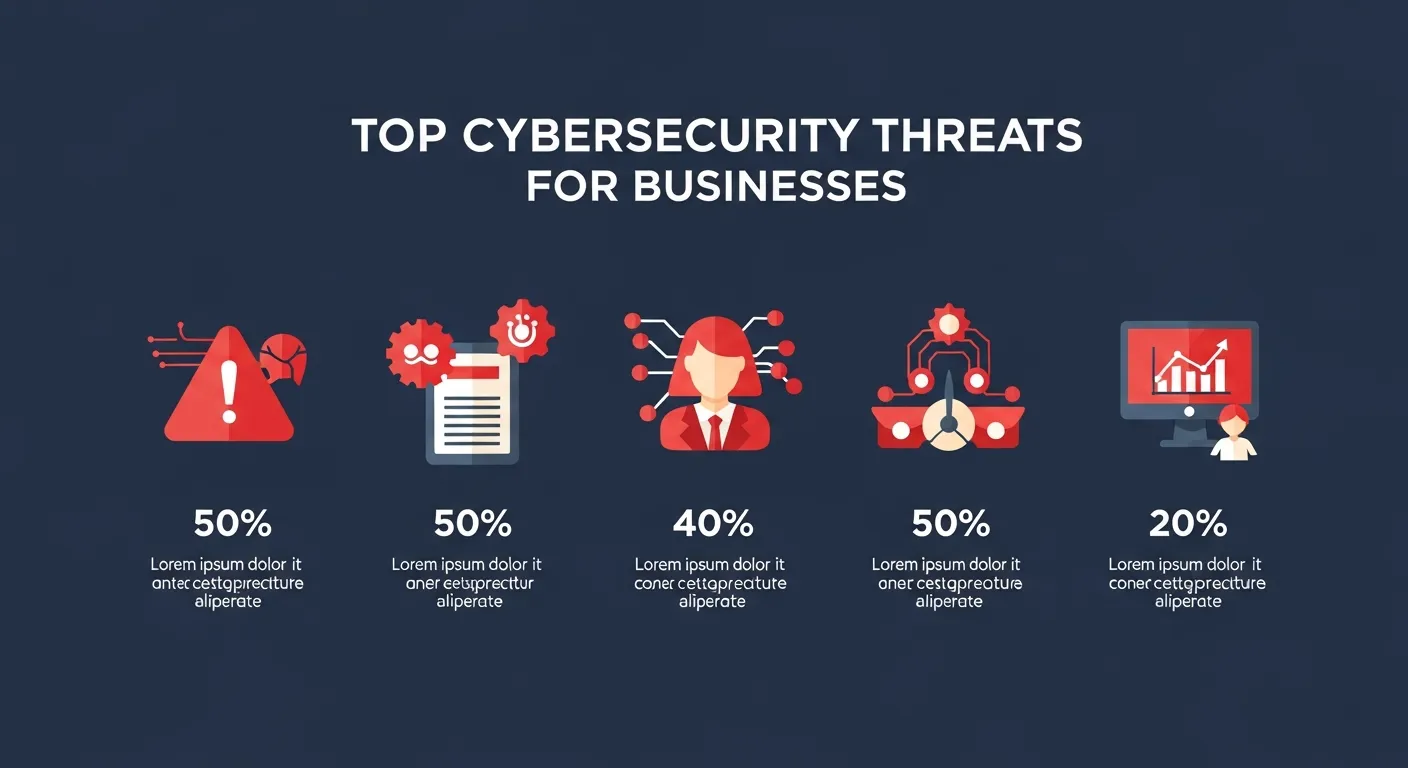
Austin businesses face a range of cybersecurity threats, with phishing attacks, ransomware, business email compromise, insider threats, and cloud misconfigurations being the most common and damaging to small and mid-sized companies in the region.
Phishing and Social Engineering
Phishing remains the number one attack vector for businesses of every size. Attackers send emails that impersonate vendors, clients, or internal executives to trick employees into clicking malicious links, downloading infected attachments, or transferring funds. Austin businesses with high email volume, including real estate firms, construction companies, and professional services offices, are frequent targets.
Ransomware
Ransomware encrypts your files and demands payment for the decryption key. For businesses without proper backups, this can mean days or weeks of downtime and the permanent loss of critical data. Ransomware attacks have increased sharply across Texas, with attackers targeting companies that rely on operational continuity, including manufacturing, engineering, and healthcare-adjacent businesses in the Austin metro.
Business Email Compromise
Business email compromise attacks are more targeted than mass phishing campaigns. Attackers gain access to a legitimate email account, study communication patterns, and then send fraudulent requests that appear genuine. Wire transfer fraud, invoice manipulation, and vendor impersonation are common outcomes. These attacks can cost businesses tens of thousands of dollars in a single incident.
Insider Threats
Not every threat comes from outside your organization. Employees who mishandle data, use weak passwords, or fall for social engineering attacks can create security vulnerabilities from within. A single employee reusing a compromised password can give attackers a foothold in your entire network. Proper access controls, security awareness training, and ongoing monitoring help reduce this risk significantly.
Cloud Misconfigurations
As more Austin businesses move to cloud platforms, misconfigured storage buckets, overly permissive access settings, and unmonitored cloud environments create exposure points. Cloud services need the same security attention as on-premise infrastructure, and many companies overlook this until a breach occurs.
Building a Cybersecurity Strategy for Your Austin Business
A strong cybersecurity strategy for Austin businesses includes multiple layers of protection: endpoint security, email filtering, employee training, backup and recovery systems, network monitoring, and a documented incident response plan that your team can execute under pressure.

Endpoint Protection
Every device that connects to your network is a potential entry point. Endpoint protection software monitors desktops, laptops, tablets, and mobile devices for malicious activity and blocks threats before they can execute. For Austin businesses with employees working from offices in North Austin, co-working spaces downtown, or home offices across the metro, endpoint protection is non-negotiable.
Email Security
Since phishing is the primary attack vector, advanced email filtering that catches malicious links, attachments, and spoofed sender addresses is essential. This goes beyond basic spam filters. Modern email security tools use AI to detect suspicious patterns and quarantine threats before they reach your inbox.
Employee Security Training
Technology alone cannot stop every attack. Your employees need regular training on recognizing phishing emails, handling suspicious requests, creating strong passwords, and reporting potential incidents. The best security programs run simulated phishing campaigns to measure awareness and reinforce good habits.
Data Backup and Disaster Recovery
If ransomware encrypts your files, your recovery depends on the quality of your backups. Automated, offsite data backup and disaster recovery ensures your critical data is protected and recoverable without paying a ransom. Regular backup testing confirms that your recovery plan actually works when you need it.
Network Monitoring and Threat Detection
Proactive network monitoring watches your traffic patterns for anomalies that indicate a breach in progress. Early detection is the difference between containing an incident in hours and discovering it weeks later after significant data loss. Managed IT services that include 24/7 monitoring provide this layer of protection without requiring an in-house security operations center.
Incident Response Planning
Every Austin business should have a documented incident response plan. This plan outlines who to contact, how to contain the threat, how to communicate with clients and stakeholders, and how to recover operations. It should also define roles, escalation paths, and communication templates so your team can act decisively under pressure. Without a plan, teams panic, make mistakes, and extend the damage. Testing the plan through tabletop exercises at least once a year ensures everyone knows their responsibilities.
Why Austin Businesses Choose a Local Cybersecurity Partner
Choosing a cybersecurity partner based in Central Texas gives you advantages that remote or national providers cannot match.
Faster response. When a security incident occurs, a local provider like Computek can respond on-site the same day. Remote providers handle everything through tickets and scheduled calls, which is not acceptable when your data is at risk.
Regional expertise. A local partner understands the Austin business landscape, the industries operating here, and the compliance requirements that apply. Whether you are a construction company in North Austin or a professional services firm near the Domain, your cybersecurity provider should know your environment.
Relationship-based support. You work with named technicians who know your systems, your team, and your business goals. Computek has served Central Texas businesses since 2001, and our cybersecurity services are built on 25 years of experience protecting companies across Georgetown, Round Rock, and Austin. We also offer a cyber security assessment to identify your vulnerabilities before attackers do.
Frequently Asked Questions
What cybersecurity threats are most common for Austin businesses?
Phishing, ransomware, and business email compromise are the most frequent threats. Austin’s concentration of tech companies and digital-first businesses makes the region an attractive target for attackers looking for valuable data and companies with limited security resources.
How much does cybersecurity cost for small businesses in Austin, TX?
Cybersecurity services are typically bundled into managed IT plans with a flat monthly fee based on the number of users and devices. The exact cost depends on your security needs, compliance requirements, and the level of monitoring and protection required. Contact a local provider for a customized quote.
Does my Austin business need a cybersecurity assessment?
Yes. A cybersecurity assessment identifies vulnerabilities in your network, applications, and processes before attackers find them. It provides a prioritized roadmap for strengthening your defenses and is the recommended starting point for any security improvement initiative.
How can I protect my business from ransomware?
The best ransomware defense combines employee phishing training, endpoint protection, email security filtering, automated offsite backups, and a tested disaster recovery plan. If ransomware does strike, reliable backups allow you to restore operations without paying the ransom.
Why should I choose a local cybersecurity provider in Austin instead of a national firm?
A local provider delivers faster on-site response during incidents, understands the Austin business environment, and builds a personal relationship with your team. National firms may offer standardized packages but often lack the responsiveness and regional knowledge that matter during a security crisis.
Related Resource: Looking to scale but already have an internal team? Discover the Benefits of Co-Managed IT Services for Growing Businesses in Austin.